
Musculoskeletal Ultrasound (MSK)


Musculoskeletal Ultrasound (MSK)
Essential information
A musculoskeletal ultrasound is used to assess the joints, muscles, tendons, ligaments, and soft tissues throughout the body. It is commonly requested to investigate pain, swelling, reduced movement, injury, or concerns raised during physical examination.
The scan provides real-time imaging that helps identify inflammation, tears, fluid collections, tendon problems, joint changes, or other soft tissue abnormalities.
MSK ultrasound is particularly useful for assessing rotator cuff injuries in the shoulder, ligament or tendon injuries in the ankle or knee, wrist and hand conditions, hip pain, and soft tissue lumps. Dynamic imaging can be used to evaluate movement, stability, and areas that only cause pain during certain positions.
Ultrasound may be one of several investigations you require, and you should consult your doctor or physiotherapist to ensure any further tests or onward referrals are arranged.
Why should I choose MedicalUltrasound.co.uk for my musculoskeletal ultrasound?
How long is the appointment?
The appointment usually takes around 20-30 minutes to complete.
How much does it cost?
The cost of an MSK scan is £145 for one area.
Multiple areas may be assessed during the same appointment if appropriate, with each additional area charged at £100.
When should you get an MSK Ultrasound?
You may be advised to have an MSK ultrasound if you have symptoms or injuries that need further assessment. This scan helps identify soft tissue and joint abnormalities that may be contributing to pain or functional limitations.
An MSK ultrasound may be appropriate if you have
- Shoulder pain or suspected rotator cuff injury
- Knee pain, ligament concerns, or swelling
- Ankle sprains or chronic instability
- Wrist or hand pain, including tendon issues
- Elbow pain, such as tennis or golfer’s elbow
- Hip or groin pain
- Muscle tears or suspected soft tissue injury
- Persistent swelling or fluid around a joint
- A soft tissue lump or mass
- A request from your GP, specialist, or physiotherapist
- Follow up after previous imaging or known injuries
MSK ultrasound is often chosen because it provides detailed, real-time views of moving structures without radiation.
How should you prepare for the scan?
No special preparation is required for an MSK ultrasound.
Wear comfortable clothing that allows access to the area being examined. You may be asked to remove or adjust clothing depending on the region being scanned.
What will you experience during the examination?
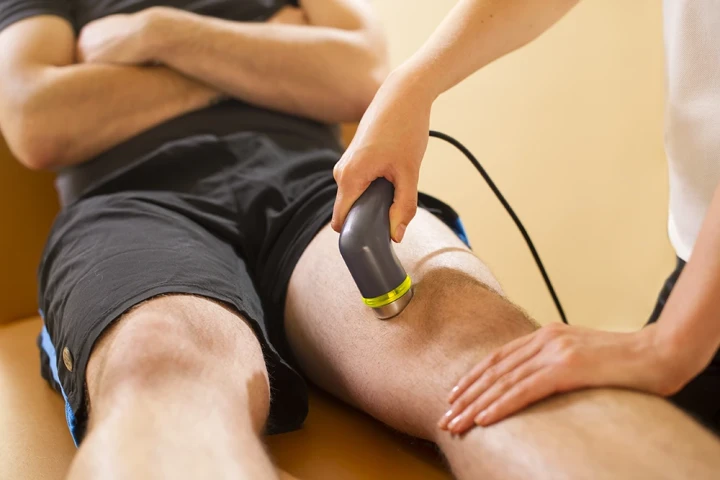
The examination will be carried out by a qualified MSK Sonographer. The procedure is non-invasive and painless. Warm gel will be applied to the area, and the Sonographer will move a small transducer across the joint or soft tissues to obtain detailed images.
You may be asked to move the joint or perform certain positions so the Sonographer can assess structures during movement.
You are welcome to ask questions during your examination.
When do you get the results?
We will send a signed report of our findings to your doctor. You should then arrange an appointment with your GP or physiotherapist, who will explain the results and discuss appropriate next steps.
Your clinician is best placed to discuss the findings because they will have access to your full medical history, examination notes, and any other tests you may require.


Musculoskeletal Ultrasound FAQs
At MedicalUltrasound.co.uk, diagnostic accuracy, clinical clarity, and patient reassurance are central to every examination. This FAQ guide covers the most common questions about musculoskeletal (MSK) ultrasound, including when it is recommended, what structures are assessed, how dynamic imaging supports diagnosis, and what happens after your appointment.
The information explains how MSK ultrasound is used to assess muscles, tendons, ligaments, joints, and surrounding soft tissues in relation to pain, swelling, injury, or restricted movement. It outlines the role of dynamic assessment during movement to identify conditions such as tendon tears, inflammation, bursitis, joint effusions, or impingement that may not be visible on static imaging alone.
Each question is presented in two parts.
A Short answer for quick reference
An In-depth answer to provide a clinical explanation and context
Whether you have been referred by your GP or are arranging a private scan, this guide is designed to help you understand the purpose of a musculoskeletal ultrasound, what to expect during the examination, and how the results support diagnosis, treatment planning, or onward care, delivered by experienced diagnostic Sonographers.
What is a musculoskeletal ultrasound?
A musculoskeletal ultrasound is a scan used to assess joints, muscles, tendons, and ligaments.
Musculoskeletal ultrasound uses high-frequency sound waves to produce real-time images of the soft tissues and joints. It is commonly used to investigate pain, swelling, stiffness, or injury affecting areas such as the shoulder, knee, hip, ankle, wrist, elbow, or foot. The scan helps identify inflammation, tears, fluid collections, and other structural abnormalities without radiation.
What conditions can an MSK ultrasound detect?
It can detect a wide range of soft tissue and joint conditions.
MSK ultrasound can identify tendon tears, tendinopathy, bursitis, ligament injury, joint effusions, synovitis, muscle strain, cysts, and soft tissue swelling. It is particularly useful for superficial structures and allows dynamic assessment during movement. Findings are interpreted alongside your symptoms and clinical examination.
Is musculoskeletal ultrasound better than an X-ray?
They assess different things and are often complementary.
X-rays are useful for assessing bones and joint alignment, while MSK ultrasound is better for evaluating soft tissues such as tendons, ligaments, and muscles. Ultrasound can also detect fluid and inflammation that may not be visible on X-ray. Your GP will advise which imaging is most appropriate based on your symptoms.
Can MSK ultrasound detect tendon tears?
Yes. It is very effective for tendon assessment.
Ultrasound can identify partial or full-thickness tendon tears, tendon thickening, inflammation, and degeneration. Dynamic scanning allows assessment of tendon movement and function, which can be particularly helpful for shoulder, Achilles, and hand tendons. Accuracy depends on the structure being assessed and the skill of the Sonographer.
Can musculoskeletal ultrasound assess joint swelling?
Yes. It can identify joint effusions and inflammation.
MSK ultrasound can detect fluid within joints, synovial thickening, and inflammatory changes. This is useful in assessing conditions such as arthritis, gout, or injury-related swelling. The scan can also help guide further management, including referral, medication adjustment, or physiotherapy.
Is MSK ultrasound painful?
No. The scan is usually painless.
Musculoskeletal ultrasound is non-invasive and does not involve needles or injections. You may feel mild pressure from the probe, especially over tender areas, but it should not cause significant discomfort. The Sonographer will adjust the technique if the area is painful.
Can MSK ultrasound be used during movement?
Yes. Dynamic assessment is a key advantage.
One of the main benefits of MSK ultrasound is the ability to assess structures during movement. You may be asked to move the joint or limb while scanning is performed. This helps identify impingement, instability, or tendon dysfunction that may not be visible when the joint is at rest.
How long does a musculoskeletal ultrasound take?
Most scans take around 15 to 30 minutes.
The scan duration depends on the joint or area being assessed and whether both sides need comparison. Complex or multiple areas may take longer. You can return to normal activities immediately after the scan.
Do I need to prepare for an MSK ultrasound?
No special preparation is required.
You can eat and drink normally and continue taking your usual medications. Wearing loose clothing that allows access to the area being scanned may be helpful. You may be asked to remove clothing or change into a gown depending on the joint being examined.
Will the Sonographer explain the findings during the scan?
Findings are formally reported in writing.
The Sonographer may describe what they are assessing, but they do not usually provide a diagnosis during the scan. A signed report is sent to your GP or referring clinician, who will explain the findings and advise on next steps.
Can MSK ultrasound detect arthritis?
It can detect features associated with certain types of arthritis.
Ultrasound can identify synovial thickening, joint effusions, and inflammatory changes seen in inflammatory arthritis. It may also show erosions in some cases. While ultrasound supports arthritis assessment, diagnosis, and classification rely on clinical assessment, blood tests, and sometimes additional imaging.
Can MSK ultrasound detect arthritis?
It can detect features associated with certain types of arthritis.
Ultrasound can identify synovial thickening, joint effusions, and inflammatory changes seen in inflammatory arthritis. It may also show erosions in some cases. While ultrasound supports arthritis assessment, diagnosis, and classification rely on clinical assessment, blood tests, and sometimes additional imaging.
Can MSK ultrasound assess shoulder pain?
Yes. It is commonly used for shoulder problems.
MSK ultrasound is widely used to assess rotator cuff tendons, bursae, and surrounding soft tissues in patients with shoulder pain. It can identify tears, inflammation, impingement, and fluid collections. Dynamic assessment is particularly helpful in shoulder imaging.
Can ultrasound detect muscle tears?
Yes. It can identify muscle strain and tears.
Ultrasound can assess muscle fibres for strain, partial tears, or fluid collections related to injury. It is particularly useful for sports injuries and superficial muscle groups. Deeper muscle injuries may sometimes require an MRI for full assessment.
Can MSK ultrasound detect ligament injuries?
Yes. Many ligament injuries can be assessed.
Ultrasound can assess superficial ligaments for tears, thickening, or inflammation. It is commonly used for ankle, knee, and wrist ligaments. Some deep ligaments may not be fully visible, and further imaging may be recommended if clinically required.
Is MSK ultrasound safe for repeated scans?
Yes. It does not use radiation.
Because ultrasound uses sound waves rather than radiation, it is safe for repeated assessment. This makes it suitable for monitoring healing, treatment response, or progression of musculoskeletal conditions over time.
Can MSK ultrasound guide treatment decisions?
Yes. It supports clinical management planning.
Ultrasound findings help guide decisions such as physiotherapy referral, activity modification, further imaging, or specialist referral. In some settings, ultrasound may also guide injections, although this depends on service availability and referral pathways.
Can MSK ultrasound detect cysts?
Yes. Cysts are often easily identified.
Ultrasound can identify cystic structures such as ganglion cysts or Baker’s cysts and assess their size and contents. This helps determine whether a lump is fluid-filled and whether further investigation or treatment is needed.
Can MSK ultrasound assess nerve compression?
It can identify some causes of nerve compression.
Ultrasound can assess nerves and surrounding structures for swelling, compression, or space-occupying lesions. It is commonly used in conditions such as carpal tunnel syndrome. Not all nerve problems are visible on ultrasound, and additional tests may be required.
Can children have an MSK ultrasound?
Yes. It is safe and commonly used in children.
Musculoskeletal ultrasound is safe for children and does not involve radiation. It is often used to assess injuries, swelling, or joint problems in paediatric patients and is generally well tolerated.
What happens after my MSK ultrasound?
Your GP will review the report and advise next steps.
After the scan, a signed report is sent to your GP or referring clinician. They will explain the findings in context and advise on treatment, physiotherapy, further imaging, or referral if needed. Many MSK ultrasound findings are managed conservatively.
To book, call: 0141 221 2496 or email[email protected]
To book, call: 0141 221 2496 or email[email protected]
Head Office
MedicalUltrasound.co.uk
Ingram House
227 Ingram Street
Glasgow G1 1DA
Contact
T: 0141 221 2496
Booking line manned
9am to 5pm 7 days a week